

Elements of Samsara
Yi Huiwook
2026.11.13.-2026.11.26.
- 오프닝
11.14. 토 17:00- - 일반 관람
월-일
13:00-18:00
Opening Reception
Sat, Nov 14, 17:00–Open to the Public
Monday–Sunday
13:00-18:00
최근 종이를 제작하는 회화에서 나는 종이를 이미지를 떠받치는 바탕으로만 사용하지 않는다. 닥섬유와 고해한 종이, 먹과 안료를 물에 풀어 회화의 바탕과 이미지를 함께 만든다. 부어뜨기[1] 과정에서 섬유는 물을 따라 퍼지고 엉키며, 먹과 안료는 서로 다른 속도로 침투하고 침강한다. 중력과 배수, 압착과 건조는 화면의 두께와 밀도, 색채와 경계를 변화시킨다. 재료의 양과 농도, 붓는 순서와 위치를 정하는 노동은 물질의 운동과 만나고, 이미 발생한 변화는 다시 다음 개입의 조건이 된다.
퍼지고 응축하고 가라앉는 움직임을 살피며 색을 더하거나 덜어내고, 먹으로 형상을 만들 때에도 섬유의 상태와 수분, 번짐을 감각하며 개입한다. 서로 다른 섬유와 안료는 물리적 성질에 따라 움직이며, 결합하면서 차이를 남기거나 이전의 형태를 잃는다. 부분들의 결합은 화면 전체를 바꾸고, 형성된 전체는 다시 부분의 상태에 영향을 준다. 예상과 달리 모인 섬유와 먹의 번짐이 다음 노동의 순서와 위치를 바꾸고, 그 노동은 다시 물질의 운동을 변화시킨다. 나는 이렇게 이미 진행 중인 관계가 다른 경로로 이어지는 운동을 클리나멘, 곧 편위의 문제와 함께 생각한다. 검음도 먹의 농도와 침투, 섬유의 밀도와 표면에 따라 서로 다른 깊이와 명도를 갖는다. 퇴적과 침강, 침투와 확산은 물질의 운동이면서 자연과 시간의 관계를 사유하게 하는 회화적 형식이 된다.
화면을 이루는 물질은 작업실에 들어오기 전부터 각기 다른 이력을 지닌다. 닥섬유와 안료는 채취와 가공, 유통을 거쳐 오고, 다시 고해하는 종이에는 이전의 생산과 사용, 노동의 시간이 남아 있다. 그것들이 해체되고 새로운 화면으로 결합하는 과정은 인간과 자연의 물질대사를 생각하게 한다. 인간과 자연의 물질적 교환은 언제나 구체적인 노동과 생산의 조건 속에서 이루어지며, 자본주의적 생산양식에서는 임노동과 대지를 둘러싼 사회적 관계에 의해 조직된다. 내 작업에서 물질대사는 이러한 역사적 인식과 함께, 물질을 다루고 다시 관계시키는 제작의 원리로 작동한다.
일부 작업에는 고문서를 (수소)결합하는 방식을 이용하기 시작했다. 나는 조선 말기부터 일제강점기와 해방기에 이르는 시기의 문서를 중심으로 그 범위를 정해 가고 있다. 조선 후기의 생산과 소유, 노동관계의 변화 위에 식민지 지배에 의한 강제적 재편이 겹쳐지고, 해방 이후에도 대지와 노동을 둘러싼 새로운 관계의 형성이 이어진 시기다. 이 문서들은 저마다 작성된 시기와 목적, 기록된 사람들의 처지에 따라 다른 사회적 관계를 담고 있다. 그중 토지의 이용과 소유, 임노동에 관한 기록은 그 시대 사람들이 생산하고 살아가는 조건을 보다 구체적으로 마주하게 한다.
고문서가 개입한 작품에서 문서의 글자와 흔적은 과거의 사회적 관계를 기록하는 동시에 지금 해체되고 결합하는 종이의 물질이 된다. 문서가 기록한 역사와 그것을 다루는 현재의 노동이 만나는 자리에서, 자본주의적 생산관계가 인간과 자연의 물질대사에 일으킨 균열은 보다 직접적인 역사적 문제로 드러난다. 이 균열의 모습은 문서의 내용과 이력에 따라 달라진다. 《비》와 같이 물질의 움직임과 결합을 중심으로 형성되는 작업, 그리고 고문서를 사용하는 일부 작업은 같은 제작의 원리를 공유하면서도 서로 다른 역사적 층위를 갖는다.
물질대사의 균열은 삶을 지탱하는 대지와 노동의 관계를 어떻게 다시 조직할 것인가라는 질문으로 이어진다. 커먼즈는 생산과 생계의 조건을 사적 축적과 배제의 질서와 다르게 형성하고 유지할 가능성으로 다가온다. 이전의 종이를 해체하고 다시 결합하는 노동에서는 한때 정해졌던 물질의 쓰임과 배열이 현재의 조건에 따라 변한다. 물질과 노동의 관계를 다시 조직하는 이 과정은, 삶의 조건을 생산하고 재생산하는 사회적 관계 또한 어떻게 달라질 수 있는가라는 질문으로 이어진다.
《elements of samsara》에서 요소들은 생성과 사용, 해체와 재결합, 변형의 과정을 거치며 순환한다. 이미지와 노동, 사회적 관계 또한 서로 다른 방식으로 반복되고 재생산된다. 그 반복 속에서 윤회를 지속시키던 관계로부터 벗어날 수 있는 순간이 열린다. 예상과 다른 응집과 번짐이 생기면 나는 다음 과정을 수정하고, 그 판단과 개입에 따라 물질은 다시 다른 경로로 움직인다. 반복은 그 내부에서 자신의 조건을 바꾼다. 제작에서 일어나는 이 편위는 반복적으로 재생산되는 사회적 관계로부터 이탈할 가능성과 이어져 있다.
물질의 운동에는 중력과 수분, 섬유의 성질과 배수의 속도 같은 조건이 작용한다. 그 조건에서 발생한 예상 밖의 결과는 나의 판단과 다시 이루어지는 노동을 통해 이후 과정의 일부가 된다. 사회적 관계 역시 사람들의 노동과 생산, 일상의 실천 속에서 반복되며 유지된다. 나는 제작에서 한 번 형성된 관계가 변화하는 과정과, 사회적 재생산의 조건을 다른 방향으로 조직하려는 실천을 함께 생각한다. 이 가능성이 어떤 역사적 변화로 이어질지는 정해져 있지 않으며, 그 열린 관계는 작업을 지속시키는 질문이 된다.
이 질문은 지난 〈신들의 거처〉연작에서 그려온 이미지도 다시 돌아보게 한다. 숲과 강, 새와 사람, 대지와 하늘이 등장하는 이전의 회화에서 서로 다른 존재들은 마주치거나 경계를 지나며 관계를 맺었다. 《신들의 거처(2023-4)》의 숲과 신당, 인물과 새, 현실과 비현실의 경계는 이후 AI 애니메이션에서 움직임과 여정으로 펼쳐졌다. 새가 벼이삭을 받아 다른 존재에게 전하는 동안 떨어져 있던 존재들이 만나고, 그 만남으로 상황이 달라진다. 정지된 회화에 응축되었던 시간은 영상에서 움직임과 서사로 나타났다.
영상을 만드는 과정에서도 처음의 이미지와 구상은 예상과 다르게 변형되었다. 나는 생성된 결과를 선택하고 폐기하며 다시 구성하는 노동[2]을 통해 서사를 이어갔다. 이 과정에서 생성형 AI가 전력과 냉각에 필요한 물을 비롯한 물질적 기반에 의존한다는 사실을 의식하게 되었다. 그 경험은 이전부터 품고 있던 생태위기에 대한 감각을 다시 돌아보게 했고, 인간과 자연의 물질대사를 본격적으로 공부하는 계기가 되었다. 현재의 물질적 제작은 과거의 이미지와 경험을 다시 읽게 하고, 이전의 이미지 또한 지금의 작업에 새로운 질문을 건넨다.
이전 회화와 영상의 숲과 새, 사람과 벼이삭은 서로 만나고 이동하며 관계를 만들어왔다. 현재의 종이회화에서 《비(2026)》와 같은 작업은 섬유와 물, 먹의 움직임이 만들어내는 형상과 시간을 드러내고, 고문서를 사용하는 일부 작품에는 생산과 소유, 노동의 역사적 기록이 물질로 참여한다. 앞서 그린 숲과 대지는 지금의 물질과 노동을 통해 다른 의미로 읽히고, 이전 이미지 속 만남과 이동은 현재의 종이회화가 형성하는 관계를 다시 바라보게 한다. 서로 다른 시간의 이미지와 물질은 현재의 공간에서 겹치고 어긋나며 과거와 지금의 사회적 관계에 새로운 긴장을 만든다. 그렇게 함으로써 이미지와 공간은 성좌적으로 배치된다.
‘파국과 꿈의 이미지’는 이 긴장에서 출발한다. 파국은 미래의 어느 시점에 닥칠 예외적 사건에만 있는 것이 아니라, 생태적 파괴와 불평등을 일상적으로 생산하고 재생산하는 사회적 관계 속에 이미 존재한다. 꿈에는 현재의 질서가 만들어낸 환상과 아직 현실화되지 않은 다른 관계를 향한 욕망이 함께 놓인다. 파국이 반복되는 조건 속에서도 다른 관계를 조직할 가능성은 남아 있다. 그 가능성이 어떤 역사적 실천과 만날지는 열려 있으며, 꿈 역시 그 결말을 미리 알려주지 않는다.
내 작업은 파국의 이미지인가, 희망의 이미지인가, 꿈의 이미지인가, 아니면 꿈을 꿀 수 있는 조건에 관한 것인가. 나는 이 질문을 하나의 답으로 마무리하지 않는다. 작품의 검음을 파국의 징표로, 밝음을 희망의 보증으로 미리 고정하지 않는다. 침강과 확산, 덮임과 드러남, 과거의 흔적과 현재의 노동은 서로를 바꾸면서도 각자의 긴장을 남긴다. 내가 유지하고자 하는 모호함은 재료와 역사의 구체성을 흐리는 상태보다, 그 구체적인 조건들이 한 이미지에서 만나며 여러 방향으로 열리는 상태에 가깝다.
내가 생각하는 작품의 아우라는 한 번 반짝였다 사라지는 신비로운 빛이나 작품의 유일성에 부여된 권위보다, 어떤 역사적 순간에 이미지가 이전에는 보이지 않았던 관계를 불현듯 드러낼 수 있는 조건에 가깝다. 그러한 순간에는 작품의 물질과 형식, 그것과 마주하는 사람의 사회적·경제적·정치적 조건이 함께 작용한다. 제작 과정에서 예상 밖의 변화가 이후 노동의 경로를 바꾸듯, 이미지 또한 서로 다른 역사적 시간과 만나며 이전에는 드러나지 않았던 관계를 보이게 할 수 있다.
예술적 개입은 물질의 운동과 노동이 서로의 경로를 바꾸는 과정에서, 주어진 관계를 다르게 조직할 가능성을 탐구하는 일이다. 그 가능성은 반복되는 사회적 관계로부터의 이탈이라는 문제와 이어진다. 작품은 서로 다른 역사적 시간과 현재의 노동이 만나는 조건을 남기며, 어떤 인식과 실천이 그 만남에서 이어질지는 이후의 시간에 열려 있다. 그 속에서 파국과 꿈은 서로를 지우지 않은 채 함께 머문다.
[1] 대체적으로 한국의 전통에서는 외발뜨기, 중국과 일본은 쌍발뜨기로 뜬다. 현대에 나타나기 시작한 부어뜨기는 발이나 망을 갖춘 틀 위에 섬유 현탁액(지료)을 직접 부어, 물을 배수시키면서 종이를 형성하는 방식이다. 지료를 가두어 배수시키는 원리는 전통적인 가둠뜨기와 유사하다.
[2] 이 애니메이션은 테크니션(전아형)의 도움과 노동을 통해 만들어졌다.
In my recent paintings, where I make the paper myself, paper is not only a ground that holds up an image. I disperse paper mulberry fiber, beaten paper, ink and pigment in water, and make the painting's ground and image together. During pour-forming[1], the fibers spread and tangle as they follow the water, while ink and pigment seep in and settle at different speeds. Gravity, drainage, pressing and drying shape the surface's density, colors and edges. My labor of deciding quantities and concentrations, the order and place of pouring, meets the movement of the materials, and each change that has already happened becomes a condition for the next intervention.
I add or take away color, and even when I form figures in ink, I intervene by sensing the fibers, the moisture and the bleeding. Different fibers and pigments keep their differences or lose their earlier forms as they combine, and the parts and the whole keep reshaping each other. Fibers that gather unexpectedly and ink that bleeds where I didn't expect it change the order and placement of my next labor, which in turn changes how the materials move. I think of this movement, where a relationship already under way continues along a different path, through the clinamen, or swerve. Even geomeum, or blackness, takes on different depths and tonal values depending on the ink's concentration and penetration and the fiber's density and surface. Sedimentation and settling, penetration and diffusion are movements of matter, and they become pictorial forms for thinking about nature and time.
These materials have histories before they enter the studio. Paper mulberry fiber and pigments arrive through harvesting, processing and distribution, and the paper I beat again still holds the time of its earlier production, use and labor. Taking these materials apart and joining them into a new surface makes me think about the metabolism between humans and nature. Under the capitalist mode of production, this exchange is organized by social relations around wage labor and land. In my work, metabolism functions together with this historical awareness as a principle of making.
In some works I have begun joining old documents into the paper through (hydrogen) bonding. They date from the late Joseon dynasty through the Japanese colonial period and the liberation era, a period in which the forced restructuring of colonial rule was layered over changes in production, ownership and labor already under way in late Joseon. After liberation, new relations around land and labor kept forming. Records of land use and ownership and of wage labor bring me face to face, more concretely, with the conditions under which people of that era produced and lived.
In these works, the writing and marks on the documents both record past social relations and become paper material being broken down and recombined now. Where recorded history meets present labor, the rift that capitalist relations of production opened in the metabolism between humans and nature appears more directly as a historical problem, and it takes different shapes with each document's content and history. Works such as 《Stele》, which take shape mainly through the movement and joining of materials, share the same principle of making with the works that use old documents, yet carry different historical layers.
The metabolic rift leads to a question: how might we reorganize the relations between land and labor that sustain life? The commons appears to me as a possibility for forming and maintaining the conditions of production and livelihood differently from an order of private accumulation and exclusion. As I rejoin earlier paper, its once-fixed uses change, which leads to a further question: how might the social relations that produce and reproduce the conditions of life also change?
In 《elements of samsara》, elements circulate through generation and use, dissolution and recombination, and transformation. Images, labor and social relations are also repeated and reproduced, and within that repetition a moment opens to escape the relations that kept the cycle of samsara going. Repetition changes its own conditions from within. This swerve in the making is connected to the possibility of breaking away from social relations reproduced again and again. What historical change this might lead to is not determined, and that openness is the question that keeps the work going.
This question also leads me back to my earlier series 〈Abode of the Gods〉, where forests, rivers, birds and people met or crossed boundaries as they formed relations. 《Abode of the Gods (2023–2024)》 later unfolded into an AI animation. As a bird receives an ear of rice and passes it on, beings that were apart come together, and that meeting changes the situation.
Through the labor[2] of selecting, discarding and recomposing generated results, I became aware that generative AI depends on a material base, including electricity and the water needed for cooling. That experience revived a long-held sense of ecological crisis and led me to study the metabolism between humans and nature in earnest. In my current paper paintings, works such as 《Stele (2026)》 reveal the forms and time created by fiber, water and ink, while in works with old documents, historical records of production, ownership and labor take part as material. Images and materials from different times overlap and diverge in the present space, creating new tension in social relations past and present. In this way, images and space are brought into constellation.
Images of Catastrophe and Dream begins from this tension. Catastrophe isn't only an exceptional event that will strike in the future. It already exists within social relations that produce and reproduce ecological destruction and inequality as part of everyday life. Dreams hold both the fantasies created by the present order and a longing for other relations not yet realized. Even where catastrophe repeats, the possibility of organizing other relations remains.
Are my works images of catastrophe, of hope, of dream, or are they about the conditions that make dreaming possible? I don't settle this question with a single answer. I don't fix the geomeum in the works as a sign of catastrophe, or their brightness as a guarantee of hope. The ambiguity I want to keep doesn't blur the specifics of material and history. It is closer to a state in which those concrete conditions meet in one image and open in many directions.
The aura of a work, as I think of it, isn't a mysterious light that flickers once and vanishes, or the authority given to uniqueness. It is closer to the conditions under which, at a certain historical moment, an image can suddenly reveal relations that weren't visible before. Just as unexpected changes alter the path of later labor, an image can make hidden relations visible as it meets different historical times.
Artistic intervention explores the possibility of organizing given relations differently, in a process where the movement of matter and labor alter each other's paths. The work leaves behind the conditions in which different historical times meet present labor, and what understanding and practice will follow remains open to the time that comes after. Within it, catastrophe and dream stay together without erasing each other.
[1] Korean tradition generally forms sheets by oebal-tteugi, while China and Japan use ssangbal-tteugi. Pour-forming, a modern method, pours pulp slurry directly onto a screened frame and forms the sheet as the water drains, much like the traditional containment method (gadum-tteugi).
[2] This animation was made with the help and labor of technician Jeon Ahyeong.
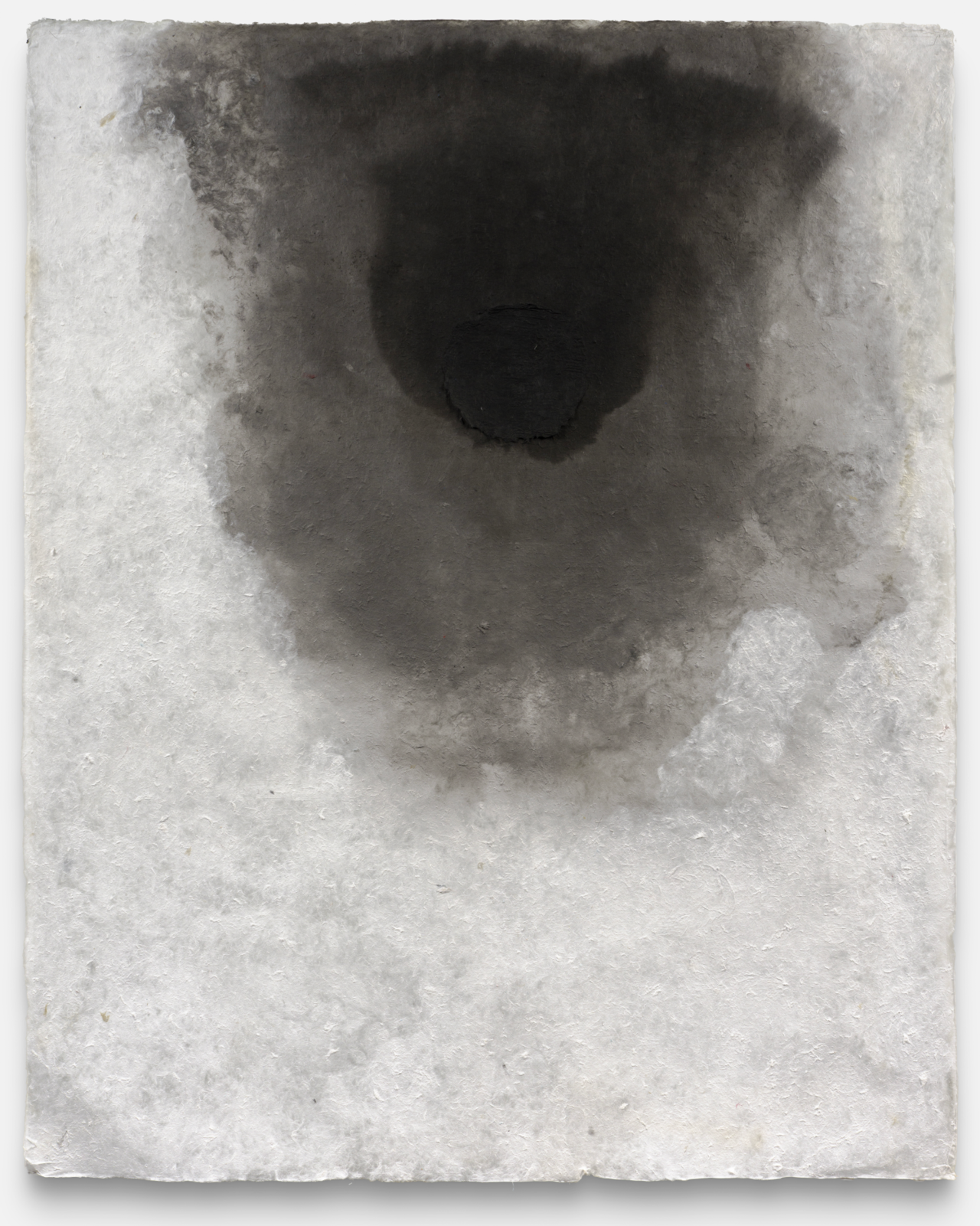
직접 만든 종이 (닥섬유, 먹, 석채) Artist‐made paper (paper mulberry fiber, ink, mineral pigments), 162.2×130.3cm
직접 만든 종이 (닥섬유, 먹, 석채) Artist‐made paper (paper mulberry fiber, ink, mineral pigments), 162.2×130.3cm